Wildlife photography workshop: Alpine ibex of the Champsaur, Hautes-Alpes
A one-day wildlife photography workshop in the Champsaur, on the edge of the Écrins National Park, among the Alpine ibex. In May, they come down to the fresh grass and let you get close. Three photographers at most, beginner or experienced, and the workshop runs even if you are the only one booked. Expect a real day of walking and a return by headlamp.
At a glance
- Duration
- 1 day
- Photography level
- All levels: no prior experience needed
- Physical effort
- 2 to 4 h of walking and under 400 m of elevation gain
- Participants
- 1 to 3 participants
- Location
- Champsaur valley – Hautes-Alpes
- Equipment needed
- Focal length > 300 mm (full-frame equivalent), headlamp
Your photographer

Maxime
Based in Vaison-la-Romaine, I photograph the landscapes and wildlife of Provence all year round, from Mont Ventoux to the Sault plateau. My work has appeared in L’Œil de la Photographie and The Guardian. On my workshops, I take you to spots I know well, at the right time of day, and explain every setting in plain words.
A photography workshop timed to the ibex’s spring
In May, the grass grows back in the pastures and valley floors. The ibex leave the rock bands to come and graze. It is the time of year when they are easiest to approach.
They have not always been here. The ibex had disappeared from the Champsaur. In 1994 and 1995, thirty animals from the Vanoise National Park were released here. The ones we will photograph are their descendants.
These ibex are not shy. You do not need an 800 mm lens: light, background and timing matter more than focal length.
What we will photograph
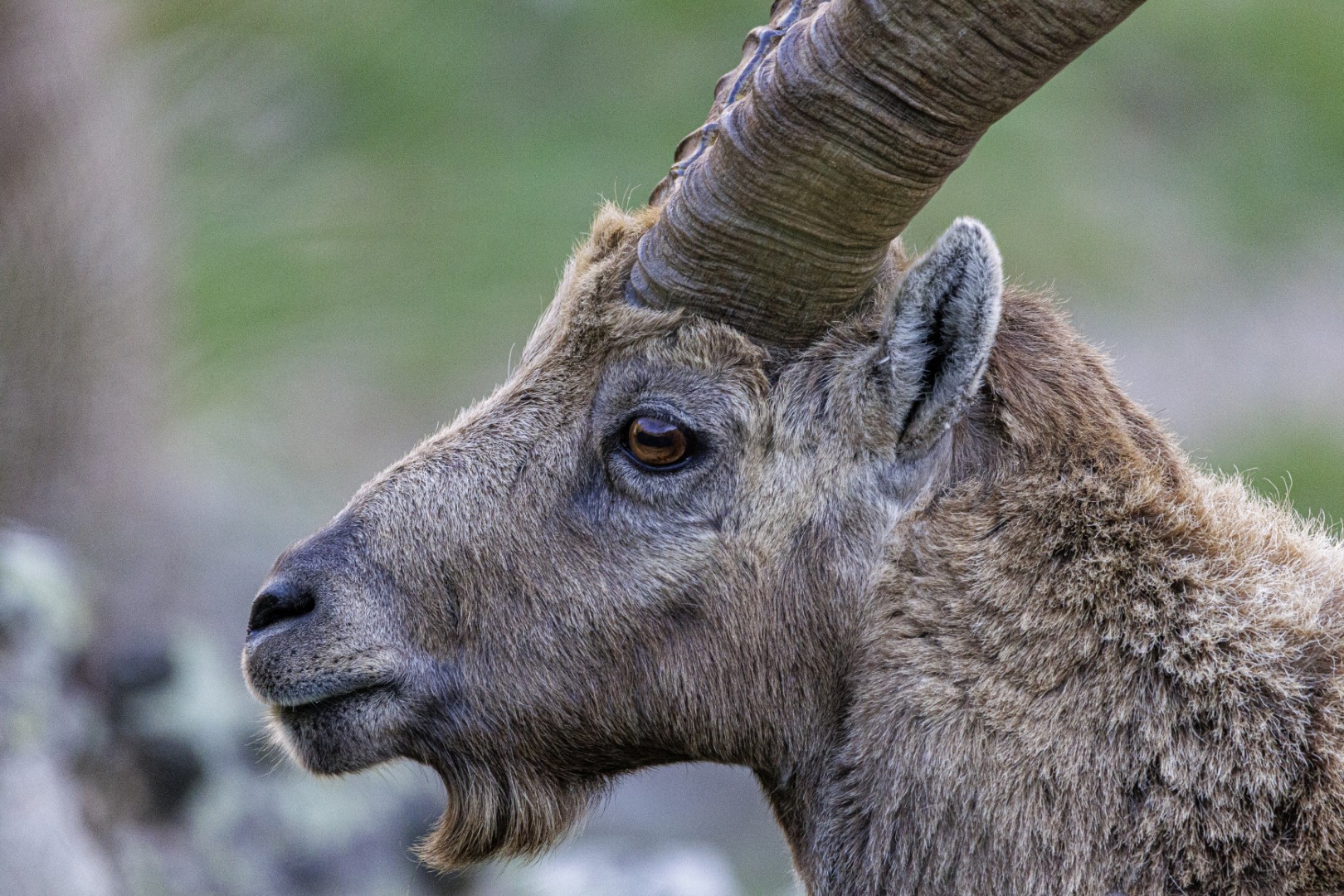
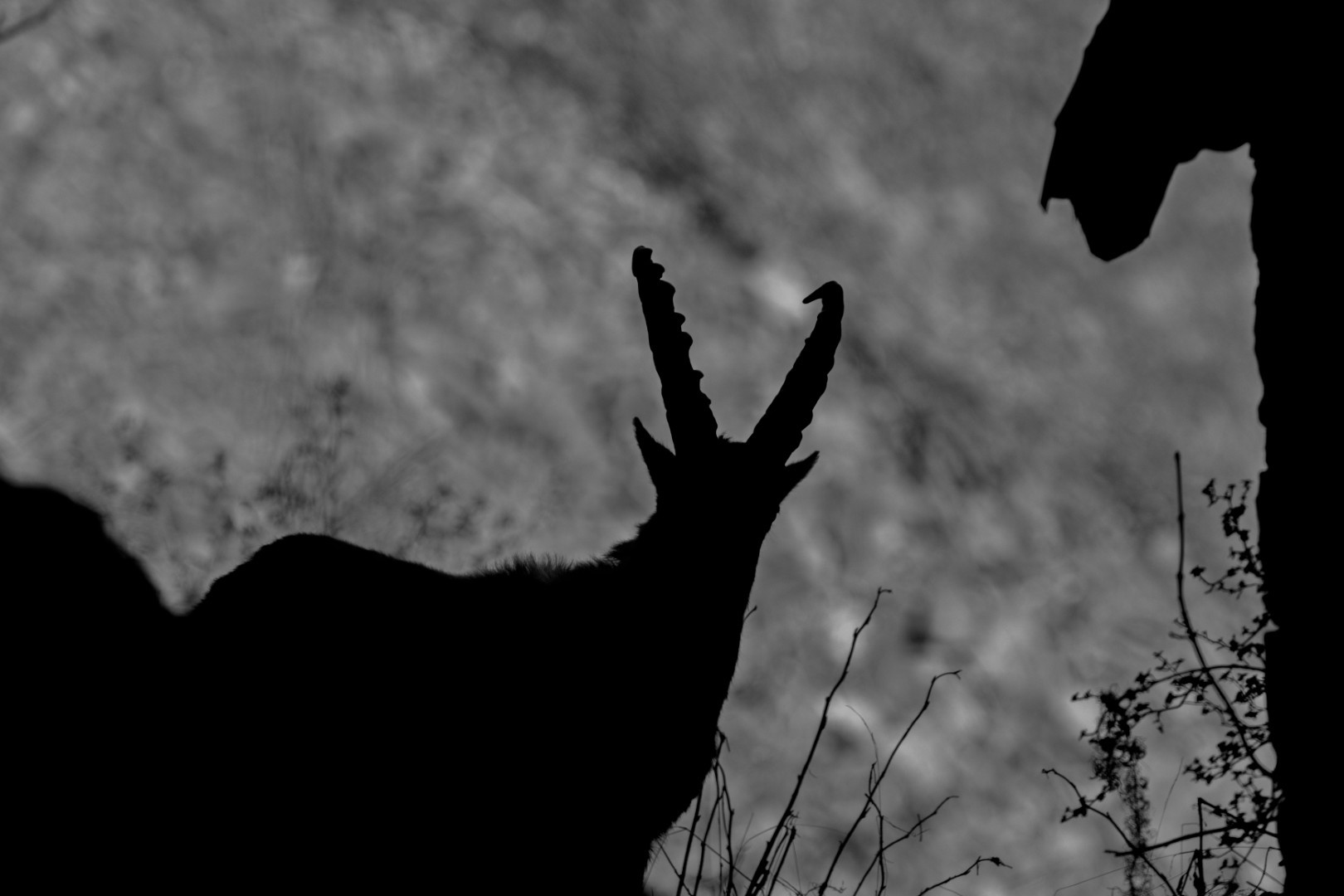
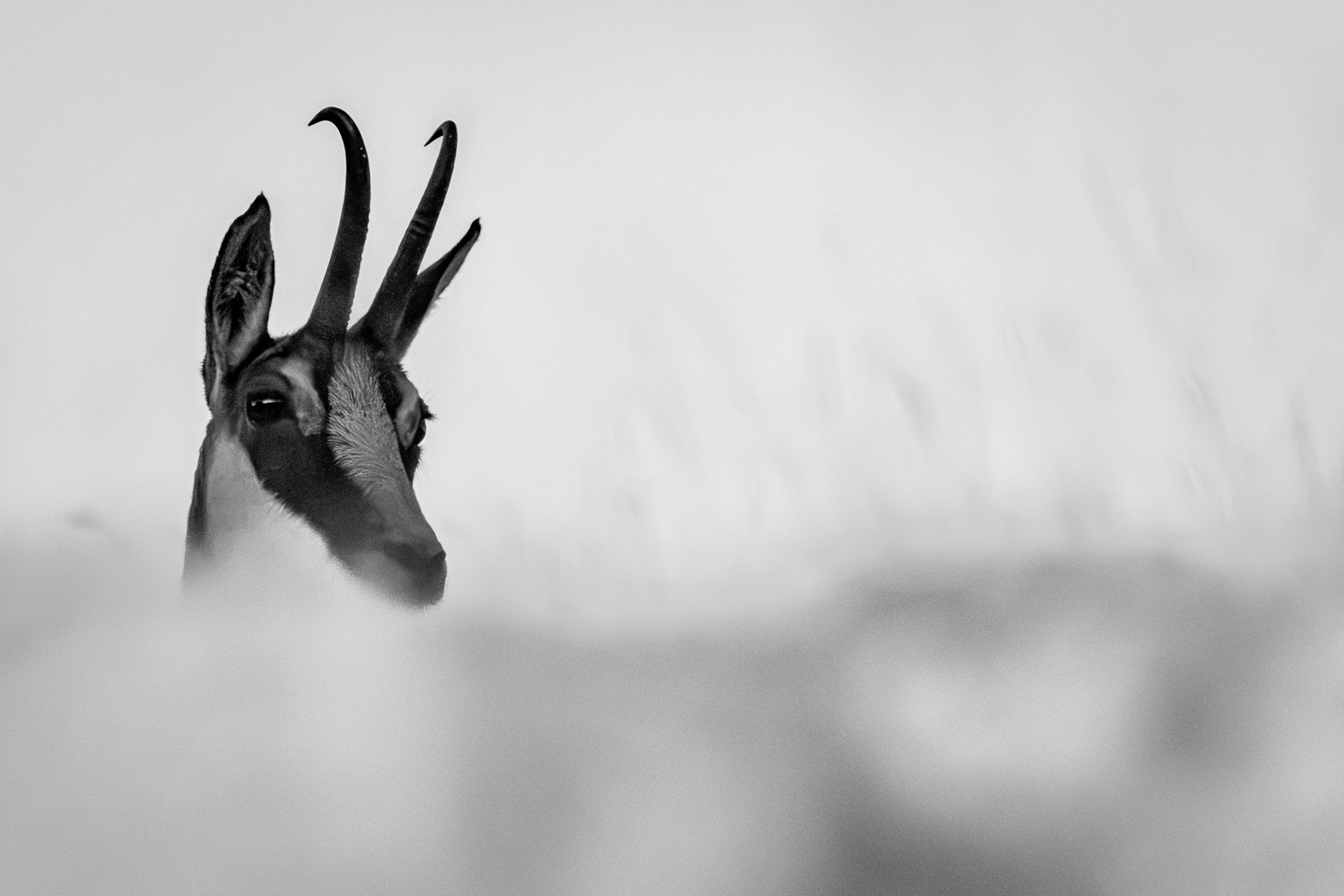
- Old males and their long ridged horns, in tight portraits
- Groups of young males and groups of females
- Behaviour: resting in the sun, small sparring bouts, licking rocks for their minerals
- The spring moult, when the winter coat falls away: a texture you only see in this season
- Ibex in their setting of rocks, snowfields and valleys
- The evening light, before we head back down
- With a little luck, chamois, marmots or a bird of prey
Why May?
The ibex have come down and snow often remains on the ridges in the background. The moult has begun. Above all, we go before the births, which mostly take place in early June. At that point the females move away on their own and must be left in peace.
Seeing ibex here is very likely, but nobody can guarantee it.
Who is it for? All photography levels, good legs
On the photography side, the workshop is open to everyone. If you are a beginner, we cover shutter speed, focusing on the eye and burst mode. We also look at the trap with these images: a dark coat against a snowy background fools the light meter. To prepare, read my basic wildlife photography settings.
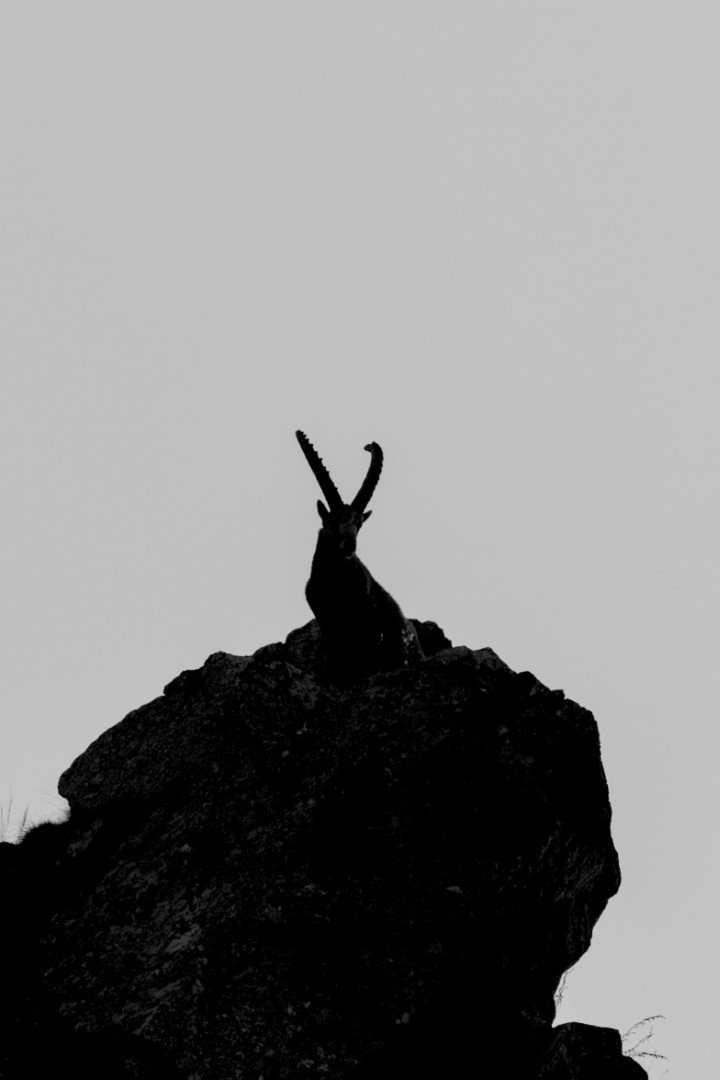
If you already shoot regularly, we work on tight portraits without cropping the horns, the animal in its landscape, and backlight.
On the walking side, however, you need to be comfortable: more than four hours over the day.
Wild animals, not a zoo
These ibex are free. We never attract them with bait or food, and we do not follow them. We settle in and let them come to us.
Often, they are the ones who come closer. In spring 2026, an old male came so close to me that at 150 mm his head no longer fitted in the frame.
That is also why the group is so small. Even when they are not shy, ibex will not put up with a crowd of photographers. Three discreet people is the maximum. For the same reason, the workshop exceptionally runs with just one booking.
A real day of walking
Allow more than 2 hours of walking on the way up and as much on the way back, for about 300 m of elevation gain. The trail is not technically difficult, but the day is long. In May, there may still be snow on part of the path.
We come back down at nightfall. A headlamp is mandatory. The best light comes late, and we stay for it.
Travel light: camera body, telephoto lens, water, food and a warm layer. A tripod is heavy over such a distance; a monopod is often enough.
How the day runs
We meet at 9 am in the Champsaur. I give you the meeting point a few days beforehand, and we arrange car-sharing.
The walk in is already a chance for first sightings. Once there, we photograph the ibex and have our picnic among them. We stay until the evening light, then walk back down by headlamp. Back at the cars around 9 to 10 pm.
Equipment to bring
A DSLR, mirrorless or bridge camera and a focal length of at least 300 mm. A 100-400 mm or 150-600 mm zoom works very well. The ibex are sometimes so close that a shorter zoom comes in handy for wide shots. Bring charged batteries, a spare battery and an empty memory card. Binoculars help you spot them from a distance. Drones are not allowed.
What else to bring
- A charged headlamp (mandatory)
- Hiking boots with ankle support, already broken in
- A picnic and at least 1.5 litres of water
- A warm layer and a windproof jacket: you stay still for a long time at altitude
- A hat and light gloves
- Sunglasses and sunscreen, as the snow reflects the light
- Depending on the weather: gaiters for the snow, a rain poncho
Transport and meals are at your own expense.
Why this workshop rather than another?
In spring 2026, I went up to bivouac in this area with my daughter. Halfway up, about fifteen ibex fell into step behind us. By evening, there were more than thirty around us. At dawn, an old male stood up on a rock against the light: the photo I had dreamed of taking. I tell the story of those three days in my Champsaur adventure (in French).