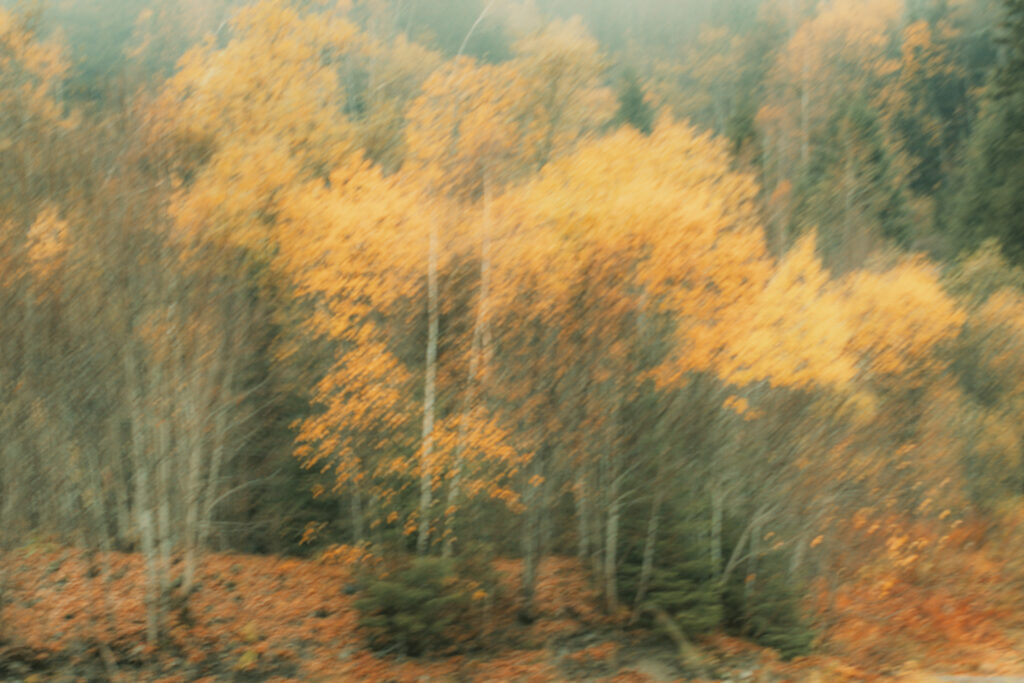
The Saint-Labre car park, a Sunday evening in November. It’s cold. And in the middle of the tarmac, an illuminated structure: Le Cabaret, unlike anything you’d find in an ordinary concert hall. Through the windows you can already make out the carmine velvet, the gilded woodwork, the mirrors multiplying the reflections of the dimmed light. A kind of giant 1920s caravan, set down right there, in the heart of the Vaucluse.
In my bag: a single lens. No zoom, no backup telephoto, no 24-70mm to cover myself. Just a 50mm f/1.8. A deliberate choice, but one that leaves zero margin for error. This is the story of that night: what you see, what you feel, and what you dial in on the camera when you’re shooting a sold-out Charlie Winston in one of the most singular venues in France.
In short: On 16 November 2025, I photographed Charlie Winston at Le Cabaret in Carpentras for the closing concert of the Soirées d’Automne. A sold-out room of ~500 people, the dimmed theatrical light of a Magic Mirrors hall, a 50mm f/1.8 as my only lens. A night between on-stage intensity and managing motion blur.
- Charlie Winston took “Like a Hobo” straight to No. 1 on the French charts in 2009, where it stayed in the Top 5 for 11 weeks (Wikipedia, 2009).
- Le Cabaret in Carpentras is a Magic Mirrors structure, one of the few in France, with a standing capacity of 950 people.
- A 50mm f/1.8 captures nearly 4 times more light than a standard f/2.8 zoom, at a price between 125 and 200 euros new.
- A prime lens isn’t a constraint you suffer: it’s a discipline that forces you to compose before pressing the shutter.
Charlie Winston — a showman who gives everything on stage
Charlie Winston isn’t the type to “put on a show” from a safe distance. British, born in Cornwall in 1978 and now based on the French Riviera, he broke through in France with “Like a Hobo”, which went straight to No. 1 on the French charts in April 2009 and stayed in the Top 5 for 11 weeks (Wikipedia, 2009). He has since won the 2010 European Border Breakers Award as the best British artist in Europe. On stage, he describes himself as someone who “completely lets go”, and it shows.
That evening, Love Isn’t Easy had been out for exactly 37 days, since 10 October 2025 (Infoconcert, 2025). The tour was in its third week. An artist breaking in new songs is an artist driven by a particular urgency: he wants these songs to exist, to be embraced by the audience. That early-tour fever reads on a face. And for a photographer, it’s a goldmine.
On stage, he switches between guitar and piano with disconcerting fluidity. His band that night — François Lasserre on guitar, Louis Sommer on bass clarinet and bass, Noé Benita on drums — offers several visual subjects at once. But it’s Charlie Winston who naturally fills the frame. Not because he tries to. Because he can’t help it.
The room is sold out. 500 people seated, open seating, in a cathedral-like silence before the first chord. When the lights go out, the tension in Le Cabaret is almost physical. These 500 people know the lyrics by heart, and from the very first song you feel it in the air, in the warmth the room begins to give off.
“Like a Hobo” went straight to the top of the French charts in April 2009 — eleven weeks in the Top 5 (Wikipedia, 2009). Sixteen years later, Love Isn’t Easy has only just been released. Shooting an artist at the dawn of a tour means catching a fever that polished, well-worn dates have lost: the urgency of bringing to life songs the audience hasn’t yet learned by heart.
Le Cabaret in Carpentras — a venue that’s already a set
Le Cabaret is no ordinary venue. It’s a Magic Mirrors structure, one of the few in France, set up on the Saint-Labre car park to replace the Espace Auzon, destroyed by fire. The architecture dates from the 1920s: carmine velvet, carved woodwork, coloured stained glass, mirrors covering the walls. The structure is circular and demountable. It can hold up to 950 people standing (Ville de Carpentras, 2023). That night, it was sold out.
Before the show, the light in the room is soft, amber, almost theatrical. The mirrors reflect the woodwork, the woodwork reflects the mirrors. For a photographer it’s both a gift and a trap: the ambient light is low well before the stage lights come on, and the reflections create unexpected perspectives that can enrich an image as easily as they can clutter it.
The stage-to-photographer distance in a 500-seat room stays reasonable even without a telephoto. With a 50mm on an APS-C sensor, I’m working at an equivalent focal length of around 75-80mm. A tight, portrait format that forces me to be close, but works very well in this intimate setting.
Carmine velvet, carved woodwork, walls of mirrors: the Magic Mirrors structure of Le Cabaret in Carpentras is rooted in the Art Nouveau tradition of the 1920s. Set up on the Saint-Labre car park after the fire at the Espace Auzon, it can hold up to 950 standing spectators (Ville de Carpentras, 2023). Through a stage reporter’s lens, that setting layers itself onto every portrait — adding a depth that modern venues simply can’t offer.
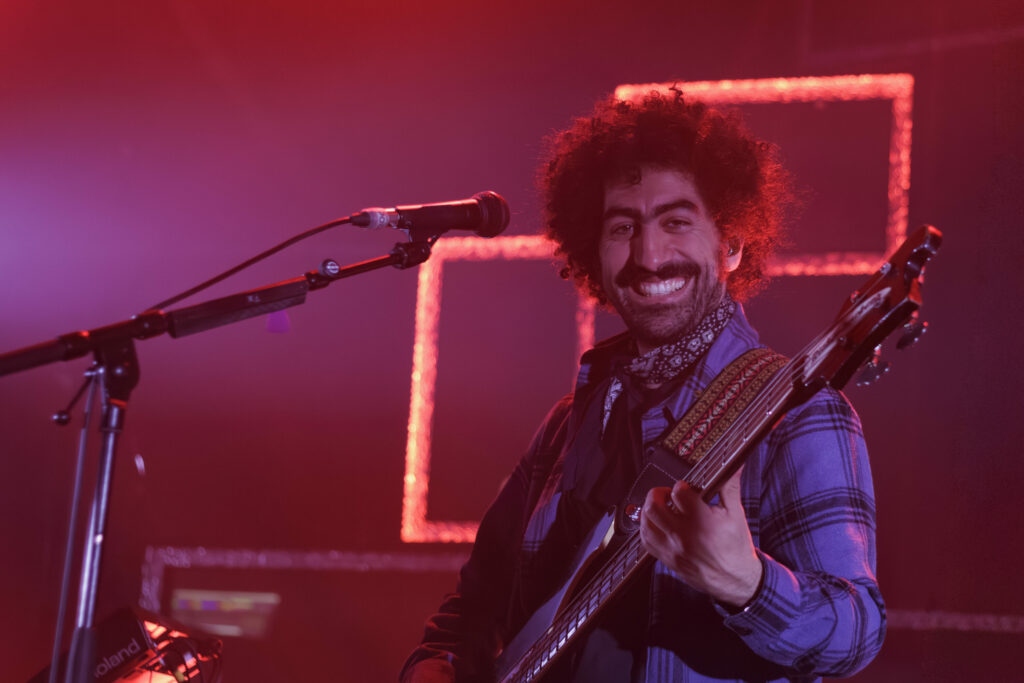
50mm f/1.8 — shooting a concert with a prime lens
With a 50mm f/1.8 at a concert, you gain in light what you lose in flexibility. It’s not a trivial trade-off. It’s a working philosophy, a choice that redefines every decision made behind the camera.
The f/1.8 aperture is about 2 stops more than a standard f/2.8 zoom. In practice: nearly 4 times more light captured by the sensor with every shot (DIYPhotography). In a venue like Le Cabaret, where the stage lights create islands of intense light against near-total darkness, that difference is often the one between a usable photo and a shot that’s blurred or buried in grain. A 24-70mm f/2.8 zoom costs between 1,200 and 2,500 euros. A 50mm f/1.8 is 125 to 200 euros new (HowToBecomeARockstarPhotographer). It’s not the same investment, nor the same way of working.
Here are the settings I used throughout the evening:
| Setting | Value | Why |
|---|---|---|
| Aperture | f/1.8 | Maximise the light captured in low light |
| ISO | 1,600 to 6,400 | Adjusted in real time to the intensity of the spotlights |
| Shutter speed | 1/160 – 1/250s | Freeze Charlie Winston’s movements |
| Focus | Continuous AF (AF-C) | The artist moves constantly |
| Format | RAW | White balance correctable in post |
| Flash | None | Forbidden and counterproductive |
The depth of field at f/1.8 is very shallow. Miss focus by a centimetre and you miss the shot: one eye sharp, the other soft, or worse, the nose sharp and the eyes blurred. Continuous AF holds up on a moving subject like Charlie Winston, but you have to anticipate his movements. On an APS-C sensor, the 50mm gives an equivalent of 75-80mm: a very portrait-oriented lens, poorly suited to wide shots. Forget the full stage frame. You pick the face, the hands, the shoulders.
In return: the bokeh. At f/1.8, the out-of-focus stage lights turn into glowing orbs that give the portraits an almost painterly dimension. It’s an effect f/2.8 zooms produce too, but with less softness and less separation between subject and background.
Here’s what I understood that night: shooting with a single prime lens forces you to make decisions before you press. With a zoom, you adjust after the fact: you frame, you zoom, you reframe. With a prime, you first have to think about your position, your distance, your angle. That constraint produces a different kind of presence. You’re more in the concert, more in the moment. And paradoxically, you come back with better images, because you chose each one consciously.
At f/1.8, the prime lets in nearly four times more light on the sensor than a standard f/2.8 zoom (DIYPhotography). 125 to 200 euros new versus 1,200 to 2,500 euros for a 24-70mm f/2.8 (HowToBecomeARockstarPhotographer): the case is clear-cut. In a low-light space like Le Cabaret, it’s often the difference between a usable frame and a shot sacrificed to grain.
The session — what happened when the lights came on
Taking the stage
The lights of Le Cabaret go out all at once. 500 people in a silence that takes you by surprise. In a sold-out room, it’s almost unsettling. Charlie Winston walks on. I’m positioned to the side, halfway up, close enough for the 50mm to fill the frame with his face. First instinct: check the exposure on a stable patch of light, before the spotlight changes begin. With a prime lens, you can’t easily reposition once the concert has started. You commit.
The first songs: calibration
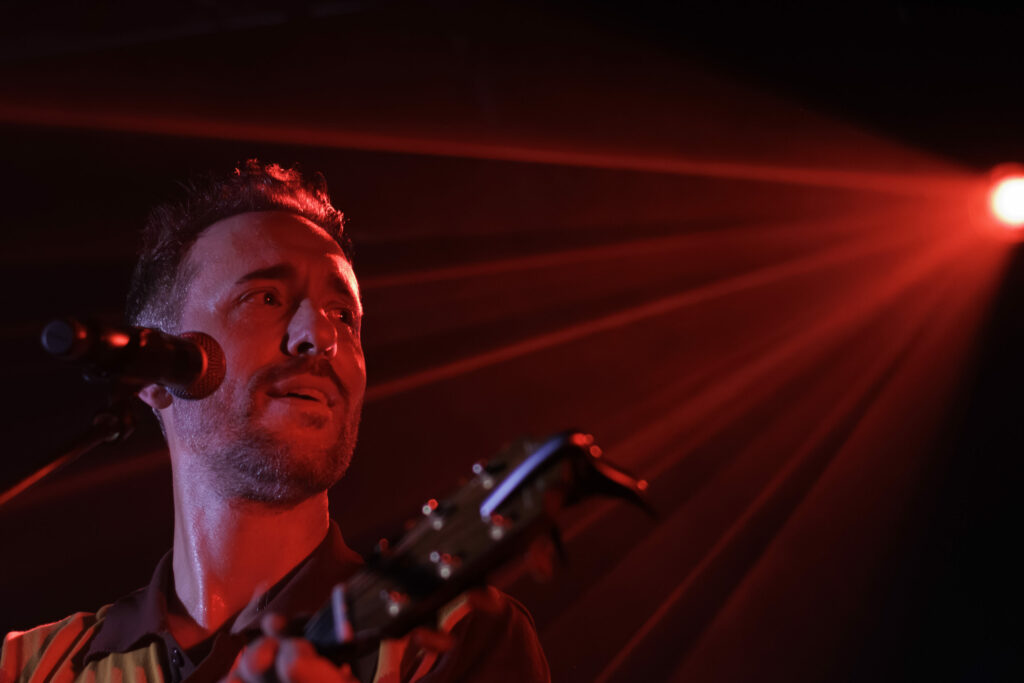
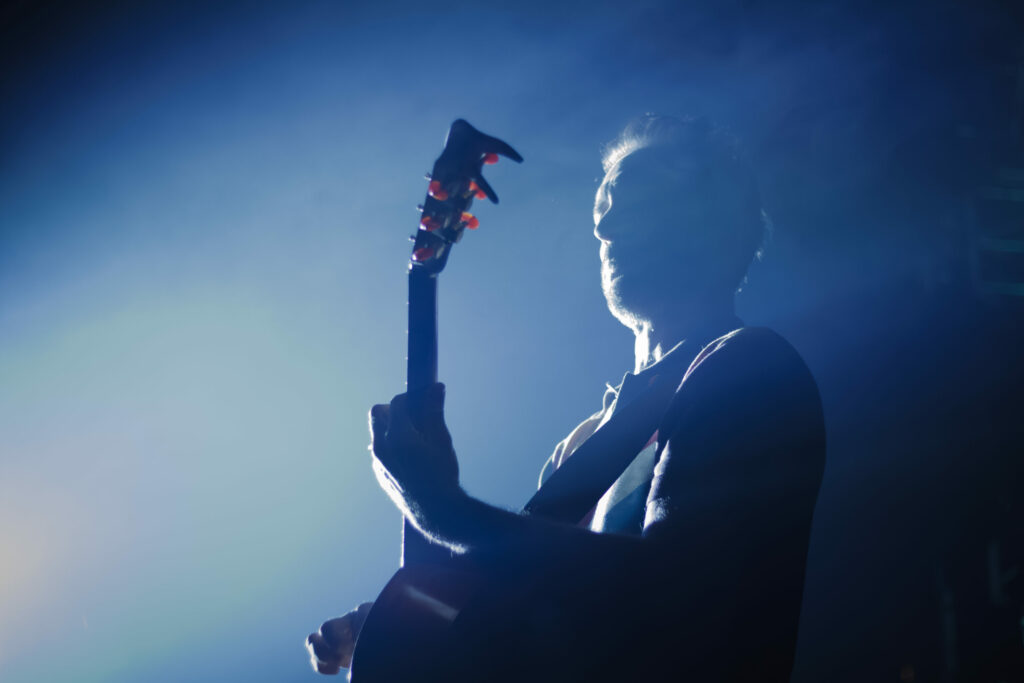
The first stage lights illuminate the artist’s face. Pure white at first — and white blows out the highlights if you don’t adjust quickly. I switch to 1/200s. Then blood red — red amplifies grain at high ISO, especially on skin tones. I drop back to ISO 3200 and leave the speed at 1/160s. Then midnight blue — blue steals sharpness on skin, and the AF struggles to lock on. I switch to manual focus on the eyes for the length of a chorus.
These adjustments happen in a few seconds, on instinct. You don’t go into the menu. You read the light, turn the dial, press the shutter. The first images of the evening are often imperfect — too dark, too blurred, badly framed because you’re still finding your rhythm. That’s normal. That’s the calibration.
The moment of grace
There was a moment, maybe on the fifth song. Charlie Winston was at the piano. He lifted his eyes to the room — not toward any one point, but to the whole of it, as if looking at all 500 people at once. A warm yellow spotlight fell on him from the left. The background was in the warm blur of the stage lights, turned into golden orbs by the f/1.8.
I pressed. The AF locked onto the left eye. The speed was at 1/200s. The ISO at 2500. This would be the shot of the night: a gaze holding both gratitude and intensity, in a light that looks like a Flemish painting. That kind of image isn’t caught with a zoom, from a comfortable distance. It demands that you be there, close, in the right place at the right moment.
The end of the concert
At some point, the camera goes away. It’s not a conscious decision. It’s simply that some evenings deserve to be lived without a filter, without a viewfinder. Charlie Winston, that night, was in a register of intensity beyond what an image can hold. I put the body away. I became a spectator again. Because a good concert can’t be photographed in full — it also has to be lived.
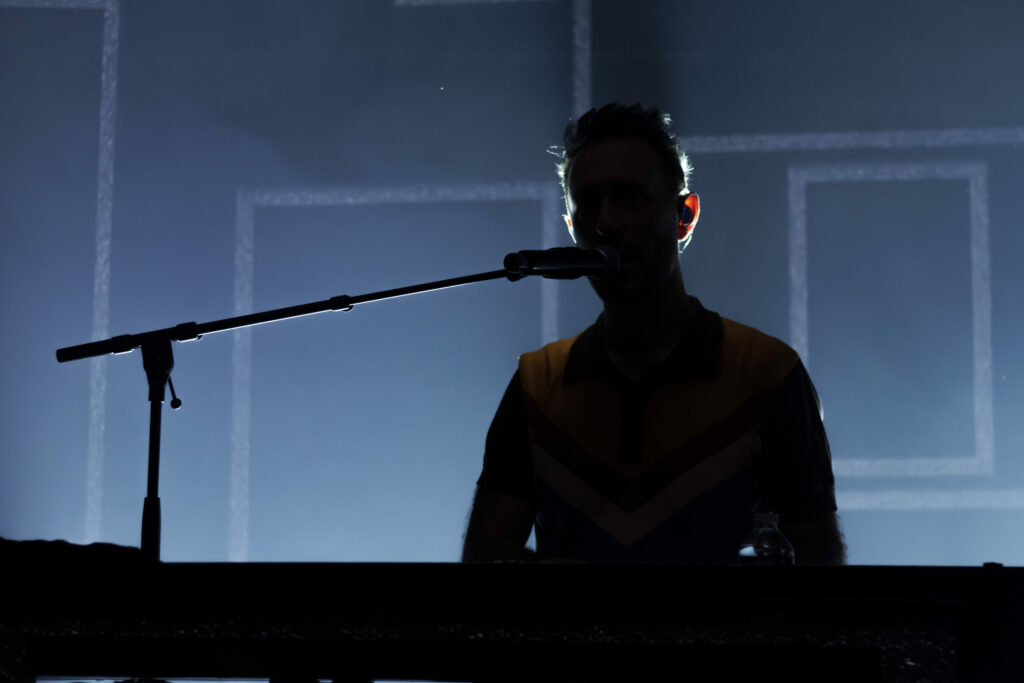
What you take away from a night with a 50mm f/1.8
The 50mm f/1.8 delivered what was asked of it. Le Cabaret’s light was too low for an f/2.8 zoom without pushing to unmanageable ISO: beyond 6400 on my APS-C sensor, the grain becomes structural, not aesthetic. The prime imposed choices. And those choices produced better images than if I’d had the freedom of a zoom. No surprise: constraint forces precision.
Charlie Winston is a generous subject. His shifts in intensity, from the fragility of the pianist to the uncontrollable energy of the standing showman, create radically different images over a single performance. There’s no “pose” to wait for. Every second is different from the one before.
Le Cabaret in Carpentras is a full character in its own right too. The mirrors, the woodwork, the warmth of the carmine velvet: it reads even in the photos. This architecture adds a layer to every image, a texture that modern concrete-and-steel venues don’t have. Working inside Le Cabaret means having a set that works with you.
Documenting artists in venues like Le Cabaret, capturing what happens on stage and in their eyes: if this kind of assignment interests you, it’s exactly what I do as a concert and festival photographer.
Frequently asked questions
Can you really photograph a concert with a 50mm f/1.8 lens?
Yes, provided you accept the constraint of a prime lens and move around rather than zoom. The f/1.8 aperture captures nearly 4 times more light than a standard f/2.8 zoom (DIYPhotography), which more than makes up for it in low-light venues like Le Cabaret in Carpentras. You have to anticipate your positions, not improvise from a corner of the room.
What settings should you use to photograph a concert without flash?
Without flash, the key settings are: aperture wide open (f/1.8 if available), ISO between 1,600 and 6,400 depending on the spotlights, a minimum speed of 1/160s to freeze the artist’s movements, continuous AF, and RAW format to correct white balance in post. These settings are adjusted continuously as the colour and intensity of the lights change.
Is Charlie Winston a good subject for concert photography?
Yes. He’s an expressive artist who constantly shifts between emotional intensity and physical energy. His expressions and gestures offer great image variety within a single concert. His presence at both piano and guitar multiplies the possible angles. The closeness of small venues like Le Cabaret makes his performance even more legible in photos: every micro-expression is there to be captured.
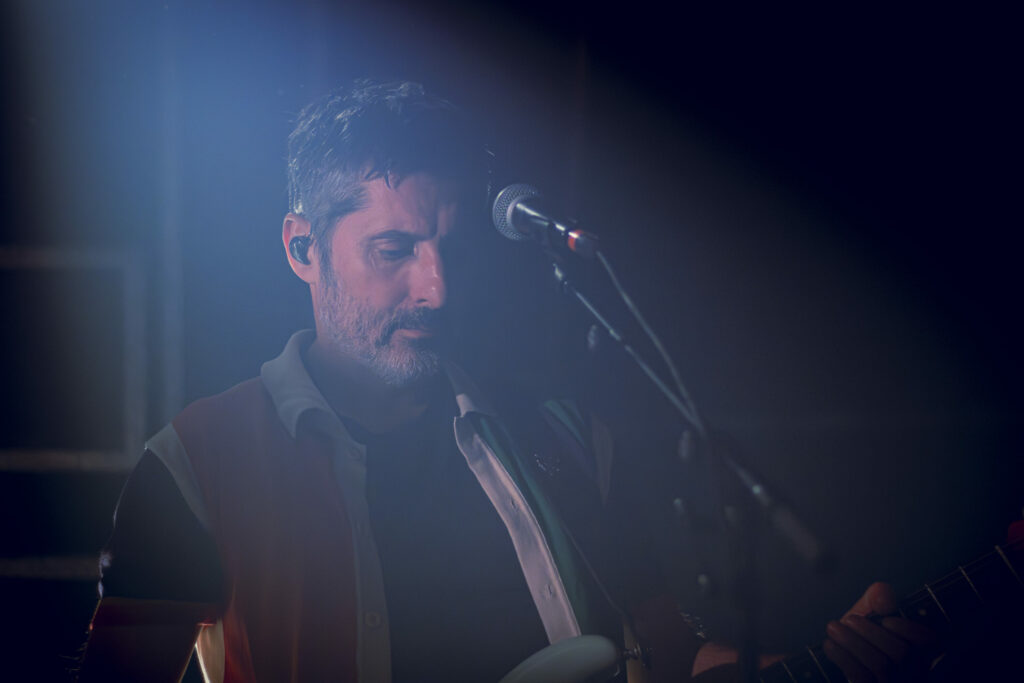
What a concert night in Carpentras taught me
A November night in Carpentras. A packed, vibrating room, an artist who needs no special effects to carry the audience, and a 50mm f/1.8 that forces you to be there, present, before you even press the shutter. That’s the essence of reportage with a prime lens: you don’t have the luxury of hesitation.
Le Cabaret in Carpentras remains one of the most photogenic venues in the Vaucluse, and probably one of the most under-documented. Its Magic Mirrors structure, its reflections and its warmth are a rare playground for a photographer. I’ll have to go back.
To discover my other concert and festival photo sessions, visit my concert photography services page.


Leave a Reply